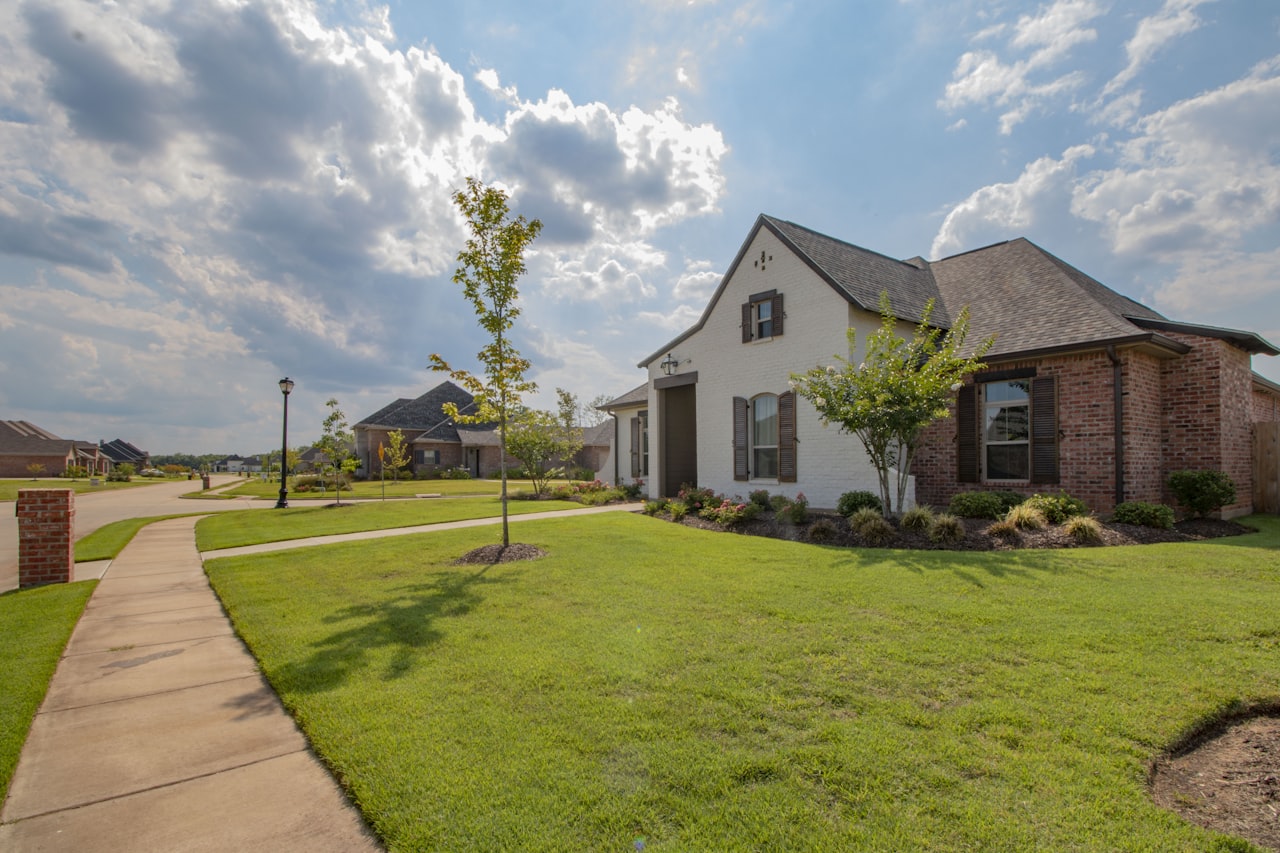
3,281 people live in Golden-Historic District, where the median age is 29 and the average individual income is $37,592. Data provided by the U.S. Census Bureau.
Total Population
Median Age
Population Density Population Density This is the number of people per square mile in a neighborhood.
Average individual Income
Most people expect a "historic district" to be a single roped-off block of old buildings. Golden defies that expectation. What locals call the historic district is really a collection of interwoven pockets clustered around Clear Creek, at the point where the Great Plains give way to the Rocky Mountain foothills fifteen miles west of Denver. Each pocket has its own character, but together they form one of the most intact 19th-century townscapes on Colorado's Front Range.
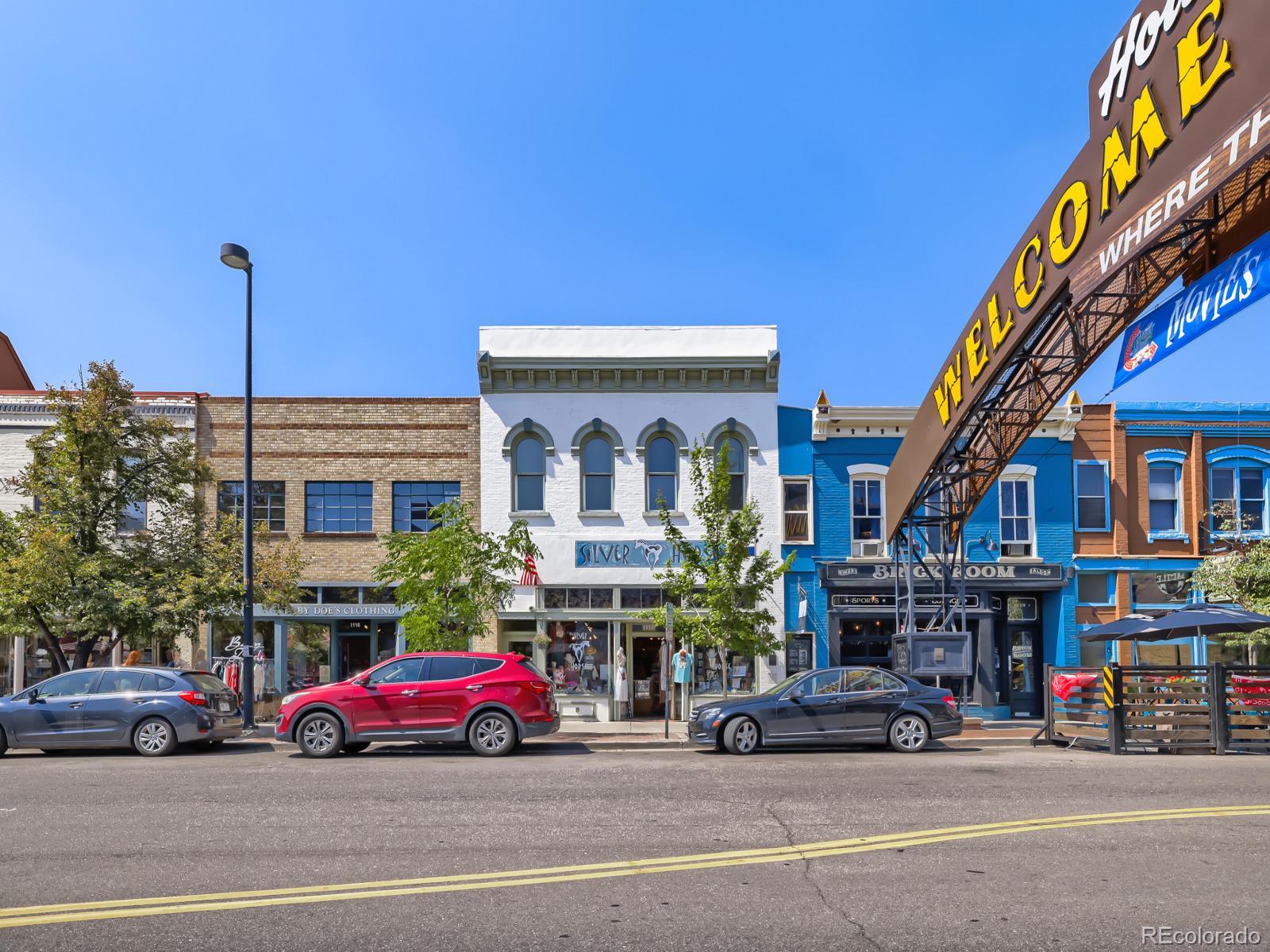
The commercial heart runs along Washington Avenue, where brick storefronts spanning Victorian Italianate to classic brick revival line a street still crowned by the famous overhead arch reading "Howdy Folks! Welcome to Golden — Where the West Lives." Radiating out from that core are several residential districts, each telling a different chapter of the town's story: the 12th Street Historic District, listed on the National Register and home to Golden's best-preserved merchant and civic-leader homes from the 1870s through the 1920s; the 8th and 9th Street Historic District, a blue-collar, industrial-era neighborhood settled starting in 1859 near the old flour mills, paper mills, and brick works; and the East Street Historic District, showcasing the architectural variety of Golden's expansion decades. Buying here means buying into a genuinely living piece of Colorado history rather than a themed reproduction of one.
To understand why homes here command what they do, it helps to understand what happened on these streets. The valley was home to the Ute, Arapaho, and Cheyenne long before gold prospectors arrived in 1858 during the Pike's Peak Gold Rush. The town was formally founded on June 16, 1859, as Golden City — and contrary to what nearly everyone assumes, it was named not for the metal but for Thomas L. Golden, an early miner in the region. Sitting at the mouth of Clear Creek Canyon, the town became the essential gateway supplying prospectors headed into the mountains.
That strategic position earned Golden a remarkable early distinction: it served as the capital of the Colorado Territory from 1862 to 1867. Territorial legislators convened in downtown buildings, and the Old Capitol Grill on Washington Avenue still stands on the site where they met. When political power shifted east to Denver in 1867, a lesser town might have faded. Golden instead reinvented itself as a manufacturing powerhouse — the "Lowell of the West" — producing coal, clay, brick, and paper (it housed the only paper mill west of the Missouri River for years) and anchoring a narrow-gauge railroad network. In 1873, German immigrant Adolph Coors co-founded a brewery along Clear Creek that would grow into one of the largest single-site brewing operations on earth. A year later, in 1874, the town founded the Colorado School of Mines to train engineers for the region's extraction industries.
More than 160 years of that story remains visible today. Landmarks like the 1867 Astor House — the first stone hotel west of the Mississippi — and the Golden History Museum & Park let residents live inside their town's history rather than merely visit it.
Golden's historic core sits in the foothills where Clear Creek cuts between North and South Table Mountains, roughly fifteen miles west of downtown Denver. Because the town preserved several distinct pockets rather than one continuous zone, its boundaries are best understood district by district.
The commercial downtown core runs north-south along Washington Avenue, bounded roughly by 10th Street to the north and 14th Street to the south, with Clear Creek forming its northwestern edge. Just south of the creek, the 12th Street Historic District stretches east-west along 12th Street between Maple and Illinois Streets. North of the creek lies the 8th and 9th Street Historic District, framed by 8th Street, 9th Street, Washington Avenue, and Ford Street. Farther east, the East Street Historic District follows East Street between 11th and 14th Streets. For a buyer, these are not interchangeable — the 12th Street area trades on stately restored Victorians, while the 8th and 9th Street district offers the more modest, workmanlike homes of Golden's industrial past.
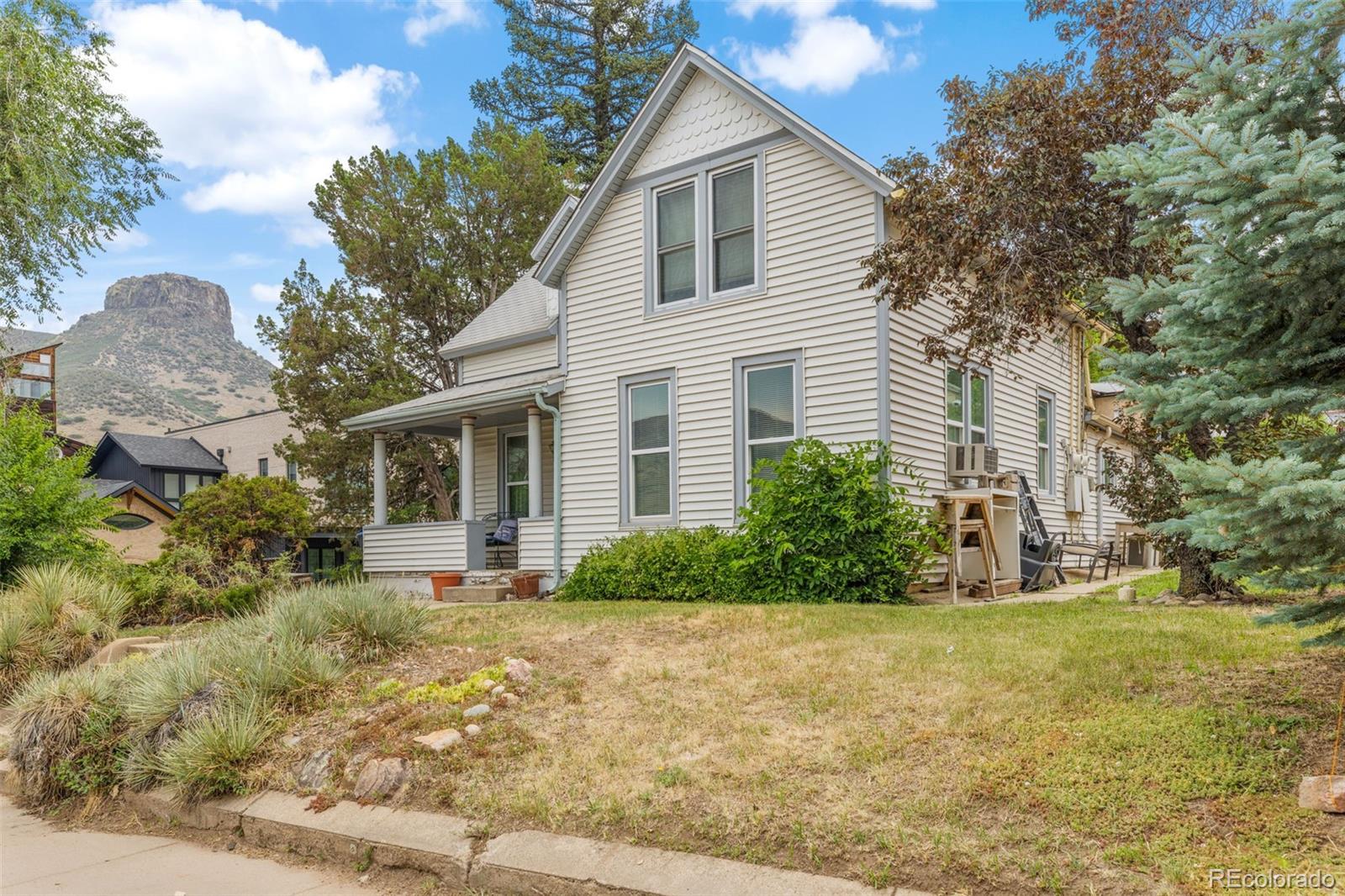
Golden's building stock reads like a timeline of the town's rise from frontier camp to Victorian city. One thing sets it apart from other Colorado mining towns: because locally fired clay and quarried stone were abundant, Golden has an unusually high concentration of masonry construction. That's not a cosmetic detail — it's why so much of the original fabric survived fires and time.
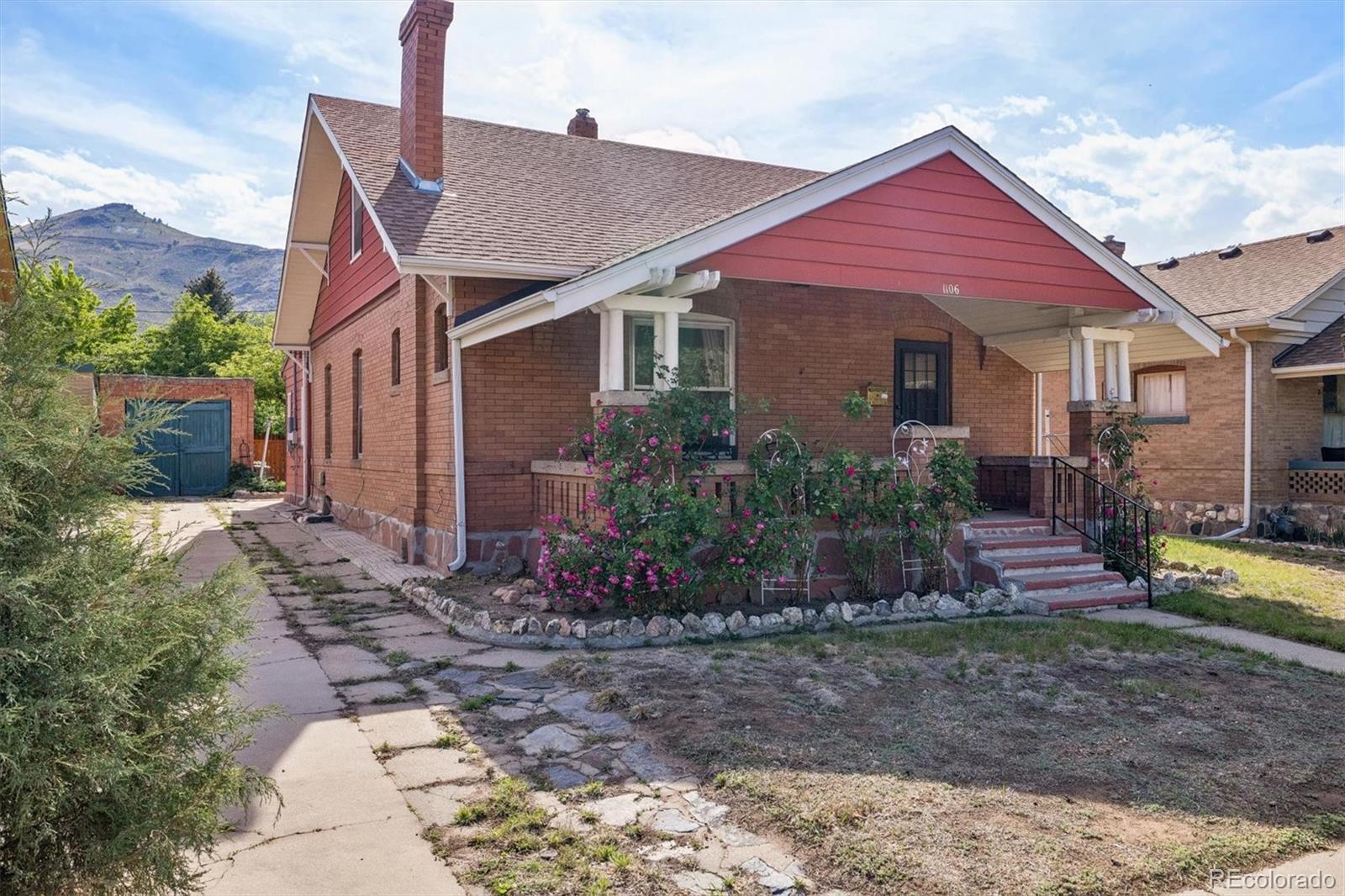
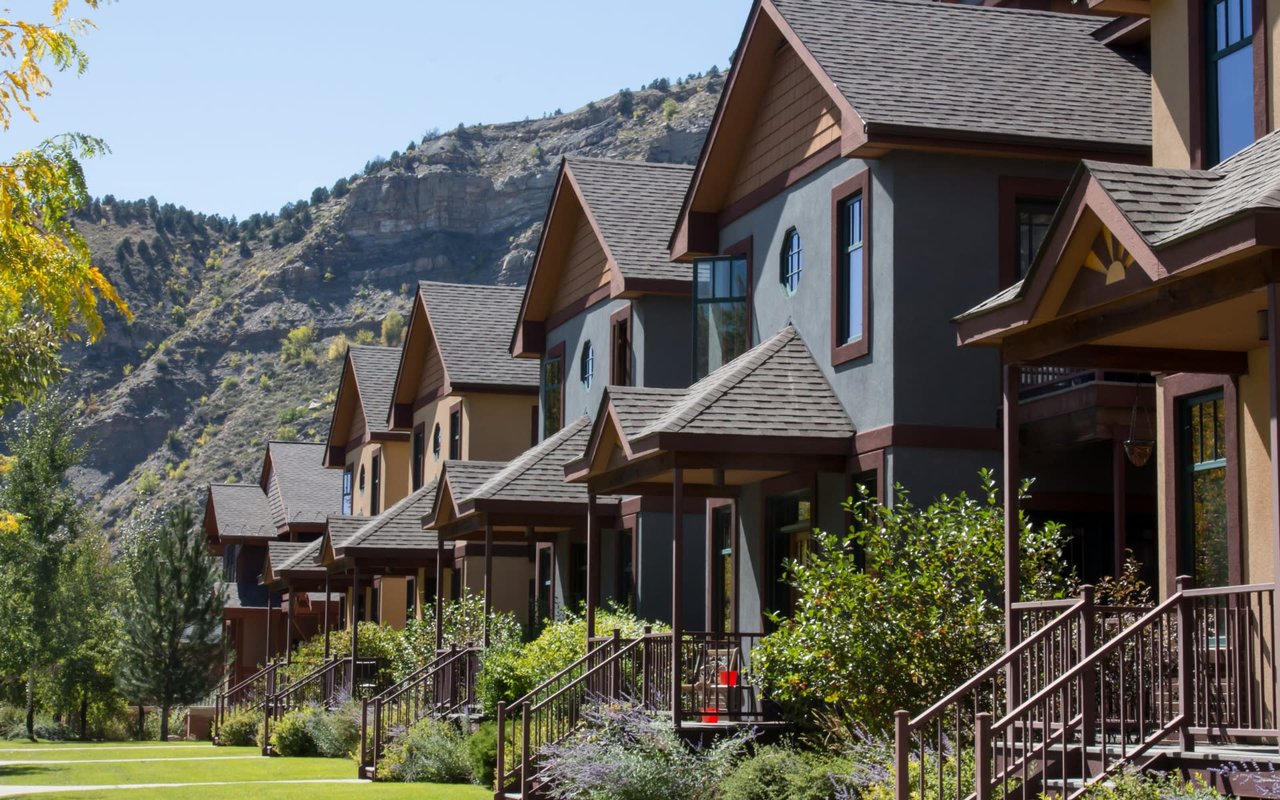
The earliest surviving buildings, from the 1860s and 1870s, are native sandstone and quarry-stone structures built with thick, fire-conscious walls; the Astor House (1867) is the definitive example. The 1870s through the 1890s brought Victorian Italianate — low-pitched roofs, ornate window hoods, decorative eaves, and symmetrical brick façades — best seen in the merchant homes along 12th Street. The 1880s to 1900s added Queen Anne flourishes: asymmetrical plans, wrap-around porches, steep gables, patterned shingles, and corner turrets, scattered across 12th and East Streets. Finally, the Craftsman bungalows of the 1900s through the 1920s, with their low rooflines, exposed rafters, and tapered porch piers, define the more modest 8th and 9th Street district.
A handful of landmark structures anchor the district's identity. The Astor House at 1217 Arapahoe once boarded legislators, miners, and educators, and remains among the oldest masonry buildings in Colorado. The Loveland House at 1111 Washington ties to W.A.H. Loveland, the pioneer and railroad entrepreneur who helped build Golden. A row of well-preserved brick Victorians along 12th Street still shows off original gingerbread trim, stained glass, and brickwork fired in local 19th-century kilns. And the Armory Building at 13th and Arapahoe, completed in 1913, holds a genuinely national distinction as the largest cobblestone building in the United States — constructed from more than 3,300 tons of cobblestones hauled straight out of Clear Creek.
The market here is among the most competitive on the Front Range, and the reasons are structural rather than seasonal. Space in these established 19th-century neighborhoods is finite, historic preservation guidelines protect it, and demand consistently outpaces what comes available. That combination keeps supply tight and values firmly in premium territory.
In practical terms, single-family homes in Golden's central and historic districts generally run from roughly $850,000 to well over $1.5 million, with fully restored Victorians in the 12th Street area sitting comfortably above the median. Historic homes frequently trade in the range of $400 to $500-plus per square foot, reflecting location, lot size, and character as much as square footage. Turnover in designated historic zones is genuinely rare, and when a well-priced home does list, it often draws multiple offers or sells above asking.
One factor every buyer should understand going in: properties within the historic districts fall under design guidelines administered by the city's Historic Preservation Board. Exterior renovations, additions, and even window replacements require approval. For most owners this is a feature, not a bug — those same rules are exactly what protect the streetscape and, with it, long-term property values. But they do limit how freely you can modify a home's exterior, and that trade-off is worth weighing before you buy.
Day-to-day life here revolves around a rare kind of walkability. From most front doors in the district you can reach a coffee shop, an independent bookstore, a craft brewery, or a farm-to-table restaurant without ever starting your car. Errands, dinner, and a creek-side walk can all happen on foot, which is precisely what draws people who are tired of suburban car dependence.
The outdoors functions as an extension of the neighborhood rather than a weekend destination. The district borders Clear Creek, where residents run and ride the paved trail year-round and, come summer, tube and kayak the whitewater park that runs right through town. North Table, South Table, and Lookout Mountain put hiking and mountain biking minutes from the front porch. Layered over all of that is a distinct college-town energy: the Colorado School of Mines campus sits adjacent to the 12th Street district, mixing students, professors, and young professionals with families who have lived here for generations. The result is a downtown that feels lively without feeling transient — historic in its bones, but far from sleepy.
Washington Avenue is the spine that holds the district together, a tree-lined corridor of 19th-century storefronts that has stayed refreshingly independent. You won't find rows of national chains here. Because Golden caters so heavily to mountain-sports culture, several shops specialize in hiking equipment, fly-fishing supplies, ski gear, and outdoor apparel, while boutiques and galleries carry Colorado-made gifts, artwork, pottery, and jewelry. Old-fashioned candy and ice cream parlors round out the strip alongside coffee shops and specialty food stores.
The dining scene reaches well beyond the beer for which Golden is famous, though the beer is worth noting — the town brews more per capita than almost anywhere. Two historic venues carry particular weight. The Buffalo Rose at 1119 Washington has operated since 1859, making it one of Colorado's oldest continuously running music and dining venues. The Old Capitol Grill & Smokehouse at 1122 Washington sits inside the very brick building that served as the Territorial Capitol in the 1860s — a rare chance to eat dinner inside a piece of state history. For everyday favorites, Woody's Wood-Fired Pizza at 1305 Washington draws steady crowds to its patio, and the Table Mountain Inn Grill & Cantina at 1310 Washington serves Southwestern fare inside a landmark adobe-style hotel. Tucked into the side alleys — Miners Alley chief among them — are the taprooms, speakeasies, and small distilleries that give the corridor its after-dark character.
Few residential neighborhoods anywhere offer this much recreation within walking distance. Golden sits exactly where the plains meet the foothills, and that geography puts riverfront paths and mountain parks within a few minutes of every historic block.
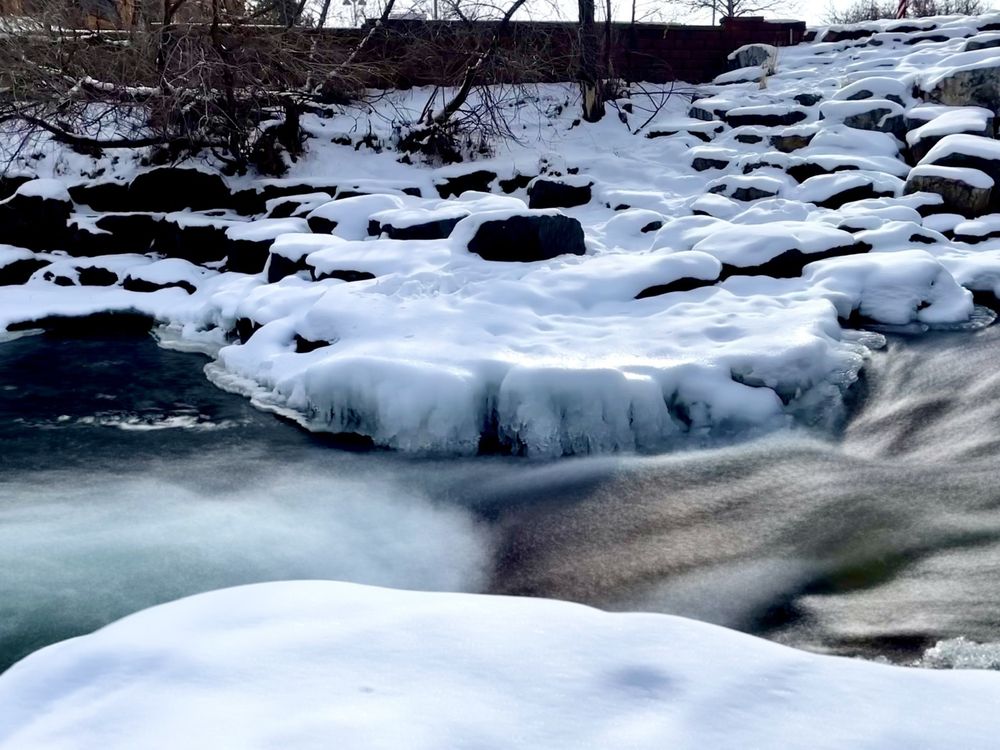
Clear Creek is the centerpiece. The paved, multi-use Clear Creek Trail runs alongside the water straight through downtown, connecting west into Clear Creek Canyon and east toward Wheat Ridge and Denver. Built directly into the stream is the Clear Creek Whitewater Park, whose engineered drops and chutes make it a regional magnet for kayakers, paddleboarders, and summer tubers. Along the banks, Parfet Park and Vanover Park provide the grassy commons where much of the town's outdoor life plays out. Head west and the path becomes the Peaks to Plains Trail (Gateway Segment), a wide canyon route with elevated bridges over the rushing creek and access points for rock climbing and fly fishing.
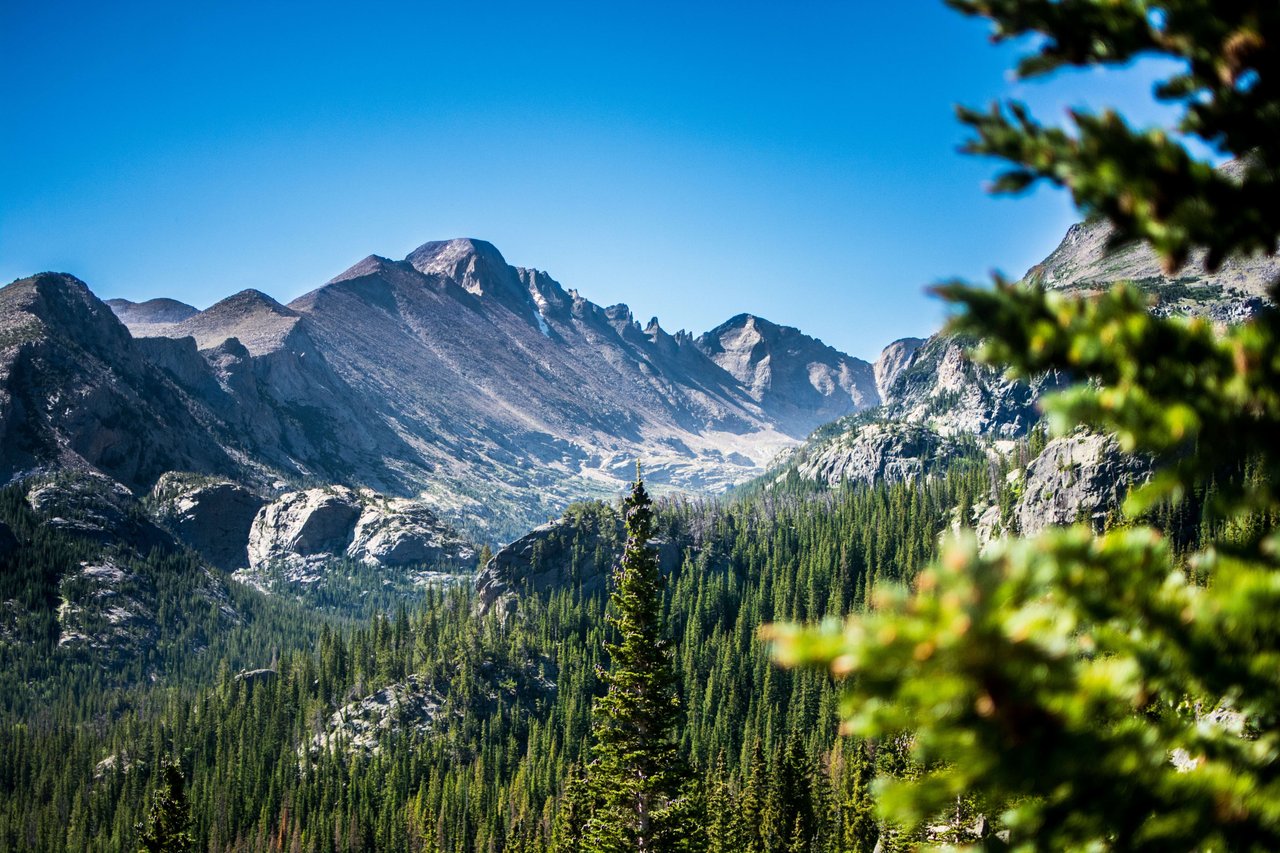
The surrounding foothills add another layer, all reachable in five to ten minutes. North Table Mountain Park offers a flat-topped mesa with 360-degree views and prime mountain biking; South Table Mountain Park holds the iconic Castle Rock formation visible right from Washington Avenue; and Lookout Mountain delivers winding cycling climbs and panoramic overlooks of the town below.
It's worth dwelling on Clear Creek specifically, because in Golden the waterfront isn't a separate amenity — it is the neighborhood's front yard. The same creek that powered 19th-century mills and supplied gold miners now functions as a downtown greenway threading directly past the historic district.
The Clear Creek Whitewater Park turns a quarter-mile of river channel into a genuine recreational destination, with engineered rock drops and eddies that fill with kayakers and tubers all summer. Adjacent, the lawns of Parfet and Vanover Parks host outdoor concerts, the Golden Fine Arts Festival, and countless casual picnics. On the north bank sits Golden History Park, a living-history site of relocated 1800s homestead cabins, a schoolhouse, and a blacksmith shop set along a creek-side path. Tying it all together are the pedestrian footbridges that connect the northern 8th and 9th Street neighborhoods across the water into the downtown core and the School of Mines campus — a small detail that makes a car genuinely optional for many residents.
Families weighing a move here benefit from a full educational ladder, from elementary school through one of the nation's premier engineering universities. Public schools fall under Jeffco Public Schools (Jefferson County R-1): Mitchell Elementary serves the neighborhood's youngest students through 5th grade, Bell Middle School handles grades 6 through 8 with STEM programming, and Golden High School — established in 1873 and the oldest public high school in Colorado — offers AP coursework, experiential learning, and athletics just south of downtown. Notably, a STEM partnership between Jeffco and the Colorado School of Mines creates guaranteed admissions pathways for qualifying local students pursuing STEM diplomas, a genuine advantage for college-bound families.
At the top of that ladder is the Colorado School of Mines, founded in 1874 and nationally ranked for engineering, applied science, and energy research. Its 373-acre campus sits right against the 12th Street district, and its presence shapes local culture and commerce in ways residents feel daily. Architectural landmarks like Guggenheim Hall (1906), with its golden-domed bell tower visible across town, and the free Mines Museum of Earth Science make the campus a community asset, not just a school.
Part of what justifies the district's reputation is the sheer density of landmarks packed into a small footprint. The Welcome Arch has spanned Washington Avenue since 1953, greeting arrivals with its neon promise that this is where the West lives — it is, fairly, the single most recognized image of the town. The Astor House (1867) on Arapahoe endures as one of the oldest surviving masonry hotels in the region. The Golden History Museum & Park along Clear Creek pairs free-admission galleries with a three-acre living-history park of relocated 1800s structures, including the Guy Hill Schoolhouse and Pearce Ranch Homestead. The Armory Building (1913) claims its title as the largest cobblestone building in the United States. And at the eastern edge of town, the Colorado Railroad Museum spreads more than 100 locomotives and rail cars across a 15-acre yard complete with a working turntable. For a neighborhood you can cross on foot in minutes, that concentration of genuine history is unusual.
The calendar in Golden's historic downtown stays full year-round, and the events themselves reveal the town's personality better than any brochure. Winter opens with Goldens in Golden in February, a delightfully quirky gathering where hundreds of Golden Retrievers and their owners crowd beneath the Welcome Arch. June brings ARTSWEEK GOLDEN, a week of creative programming that culminates in a juried art festival in Parfet Park. Late July belongs to Buffalo Bill Days, the town's legacy festival honoring the Western icon with a Washington Avenue parade, live music, and family activities. August delivers the prestigious Golden Fine Arts Festival along Clear Creek, drawing thousands to view juried ceramics, photography, sculpture, and painting.
Between the marquee festivals, the recurring traditions are what make the place feel like home. The Golden Farmers Market runs Saturdays from late spring into autumn at 10th and Illinois. Summer brings Wednesdays on the Creek, a concert series on the banks behind the Golden Hotel, plus monthly Movies & Music in the Park. And December wraps up the year with Olde Golden Christmas, a month of candlelight walks along the creek, Victorian light displays down Washington Avenue, parades, and holiday markets.
For all its small-town feel, the historic district is genuinely well connected — a rare combination that lets residents enjoy village-scale living without sacrificing metro access. Several major routes converge nearby. US-6 (6th Avenue) runs straight into central Denver, putting downtown roughly 25 to 35 minutes away in normal traffic. I-70 is minutes off, opening immediate access west into the mountains for skiing and camping, or east toward Denver International Airport (about 40 to 50 minutes). CO-93 heads north to Boulder in around 25 minutes, while C-470 loops toward the southwestern suburbs.
Public transit is a real option too, not an afterthought. The RTD W Line light rail terminates at the Jefferson County Government Center–Golden Station and runs directly to Denver Union Station in about 40 minutes. The free, zero-emission Ore Cart Shuttle links the light rail station, downtown, the School of Mines campus, and neighborhood hubs, and RTD FlexRide offers on-demand point-to-point service across most of Golden. But the truth most residents will tell you is that within the district itself, the compact 19th-century grid, the pedestrian bridges over Clear Creek, and the protected bike paths mean most daily errands never require a vehicle at all.
After fourteen years working these streets, we've learned that Golden's historic core is a spectacular fit for the right buyer and a genuine mismatch for the wrong one — and being honest about both saves everyone heartache.
You'll likely fall in love with it if you want a walkable, Western-town lifestyle where coffee shops and creek trails replace strip malls; if you're an active outdoor person who wants whitewater, mountain biking, and canyon climbing as part of your everyday routine rather than a road trip; if you value architectural heritage and are drawn to preserved 19th-century brickwork and tree-lined streets; and if you want a real commute into Denver or Boulder while coming home to a distinct foothills town at night.
It may not be the right fit if you're shopping on a tight budget, since restricted supply and historic land values push prices well above the metro median. It can frustrate buyers who dream of building a modern custom home, because preservation guidelines limit exterior changes, additions, and tear-downs. Those who crave quiet, low-traffic weekends should know that summer festivals draw real crowds to Washington Avenue and the creek. And anyone wanting a sprawling suburban lot will find mostly compact, original town parcels here rather than wide acreage. None of these are dealbreakers for the people this neighborhood is made for — they're simply the honest terms of living somewhere this special.
Buying or selling in a neighborhood this nuanced rewards local knowledge, and that's exactly what we've built our team around. The Fox Group is a Golden-based real estate team led by broker associate Jeff Fox, a 14-year veteran of this market, serving buyers and sellers across Golden, the Denver metro, and the mountain communities of Evergreen, Morrison, and Conifer. We're not a numbers-driven operation, and we won't try to impress you with sales counts — this is a people business first. We take the time to understand your goals, your priorities, and what "home" actually means to you, because when we know you, we can serve you well. If you're considering a move into the Golden Historic District — or thinking about what your current home might be worth in today's market — we'd love to talk. Reach out to The Fox Group to start the conversation, or use our online home valuation tool to get a sense of where you stand.
There's plenty to do around Golden-Historic District, including shopping, dining, nightlife, parks, and more. Data provided by Walk Score and Yelp.
Explore popular things to do in the area, including Golden Sweets, D’s Delicious Desserts, and Digger's Den.
| Name | Category | Distance | Reviews |
Ratings by
Yelp
|
|---|---|---|---|---|
| Dining · $ | 0.21 miles | 158 reviews | 4.1/5 stars | |
| Dining | 0.21 miles | 0 reviews | 0/5 stars | |
| Dining · $ | 0.24 miles | 2 reviews | 3/5 stars | |
| Active | 0.13 miles | 0 reviews | 0/5 stars | |
| Active | 0.19 miles | 0 reviews | 0/5 stars | |
| Active | 0.21 miles | 1 review | 5/5 stars | |
| Active | 0.21 miles | 0 reviews | 0/5 stars | |
| Active | 0.21 miles | 0 reviews | 0/5 stars | |
| Active | 0.21 miles | 0 reviews | 0/5 stars | |
| Active | 0.21 miles | 0 reviews | 0/5 stars | |
| Active | 0.21 miles | 0 reviews | 0/5 stars | |
| Active | 0.21 miles | 0 reviews | 0/5 stars | |
| Active | 0.21 miles | 0 reviews | 0/5 stars | |
| Active | 0.23 miles | 9 reviews | 1.9/5 stars | |
| Active | 0.29 miles | 12 reviews | 4.6/5 stars | |
| Beauty | 0.18 miles | 23 reviews | 3.9/5 stars | |
| Beauty | 0.21 miles | 0 reviews | 0/5 stars | |
| Beauty | 0.21 miles | 0 reviews | 0/5 stars | |
| Beauty | 0.22 miles | 0 reviews | 0/5 stars | |
| Beauty | 0.24 miles | 59 reviews | 4.3/5 stars | |
| Beauty | 0.27 miles | 14 reviews | 4.8/5 stars | |
|
|
||||
|
|
||||
|
|
||||
|
|
||||
|
|
||||
|
|
Golden-Historic District has 1,098 households, with an average household size of 2. Data provided by the U.S. Census Bureau. Here’s what the people living in Golden-Historic District do for work — and how long it takes them to get there. Data provided by the U.S. Census Bureau. 3,281 people call Golden-Historic District home. The population density is 7,120 and the largest age group is Data provided by the U.S. Census Bureau.
Total Population
Population Density Population Density This is the number of people per square mile in a neighborhood.
Median Age
Men vs Women
Population by Age Group
0-9 Years
10-17 Years
18-24 Years
25-64 Years
65-74 Years
75+ Years
Education Level
Total Households
Average Household Size
Average individual Income
Households with Children
With Children:
Without Children:
Marital Status
Blue vs White Collar Workers
Blue Collar:
White Collar:

Compass
1900 W 32nd Ave 3rd Fl
Denver, CO 80211
The Fox Group